
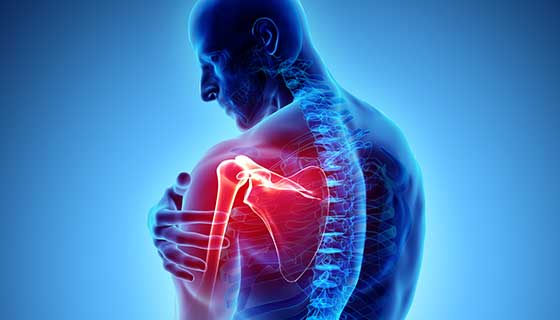

My shoulder hurts when I reach out to the side.
Commonly heard comments and questions
I feel some clicking – is this OK?
I cannot lie on my side. What does that mean?
I fell down, and now I can’t raise my arm.
asked of a shoulder specialist
Understanding when to get help is one of the most pressing questions that patients have for me as a shoulder surgeon in Grand Rapids, MI. Generally speaking, most shoulder pain is short lived and spontaneously resolves. Very few issues require immediate attention. Urgent appointments can lead to unneeded workup (ie, MRI), improper diagnosis, and contra-indicated procedures (surgery). One sure way to get an operation is to rush in for help, demand an MRI (it will find something), and forget that patience is a virtue. Surgery is a challenging and expensive path to achieve an outcome that can likely be obtained simply by giving things time. Yes, I am a surgeon – my job is often best done by telling you that surgery is neither needed nor beneficial for your problem.
How common is shoulder pain?
Shoulder pain is one of the most common musculoskeletal reasons for patients to call their doctor. In fact, some studies show that around 15% of the population is currently living with shoulder pain. Up to 70% of people will experience shoulder pain during their lifetime. The key is determining which pain should lead a person to contact their doctor.
Some keys about when to seek help
- Sudden pain or weakness after a specific injury – this would include things like falling on the arm, accidents, or sports injuries
- Pain that lingers for more than 3-4 months
- Pain that is associated with numbness down the arm into the hand (this might be a spine problem)
- Failure to respond to a program of gentle stretching and modification of activity to avoid painful movements (giving it at least a couple of months)
- Difficulty sleeping at night. Sleep is important to overall health and well being
When is it OK to wait?
- No specific trauma occurred
- Pain is a result of a minor strain, such as reaching into the backseat of the car
- When you are still able to exercise and workout
- If you experience “noise” or “clicking”, but don’t have pain
What can I do if I decide to wait for an evaluation?
Start by backing off your activity level, and generally trying to avoid what makes it hurt. This is more challenging if your employment requires you to use your shoulders in painful areas.
Over the counter medications, including NSAIDS (a class of anti-inflammatory medications that includes ibuprofen and naproxen) and Tylenol can help to provide relief, especially while sleeping at night.
Painful shoulders tend to lose motion, which can exacerbate the problem. Stiffness hurts, so avoiding loss of flexible is important to maintaining a healthy shoulder. It is quite helpful to utilize some gentle stretching exercises at home, or with the help of a physical therapist. Recommended stretches can be found in my prior post on “frozen shoulder”.

Formal physical therapy has been shown highly effective for treatment of shoulder pain – definitely give this a try if your doctor prescribes this intervention. In fact, even with a full thickness rotator cuff tear, it has been shown effective in 75% of patients1. PT before MRI is usually a good motto.
Finally, occasional corticosteroid injections can be used judiciously to help calm flares in pain and allow you to work on range of motion.
The problem with routine MRI
I often recommend against routinely getting MRI scans. Am I doing this because I like to see you suffer? Of course not! I am doing this because it is often in your best interest. Why?
Shoulder MRI when beyond the age of 40 will commonly demonstrate all or some of the following findings:
- Partial or full thickness rotator cuff tear
- AC joint arthritis
- Bursitis
- Rotator cuff (supraspinatus) tendinosis
- SLAP/labral tear
This can be frightening for any patient who happens to read the radiology report. Patients are often successful at convincing their primary care doctor to order the MRI before any other evaluation or treatment. They come to me with preconceived notions about why their shoulder hurts: “I have a tear, I have arthritis, I have a labral tear.” My job becomes more difficult managing their expectations for surgery based on these MRI findings. Although I am the expert, the MRI findings seem to more easily trump my advice. Instead of looking at the MRI, it would be more productive to consider the helpful framework of the “4 S’s” (see my blog page on this important concept). Most shoulder pain will fall into one of those buckets, and is better managed by addressing the real underlying issue(s), rather than a simple MRI finding.
MRI is useful to confirm a suspected diagnosis, but given the high prevalence of “findings”, it is an unreliable and expensive screening test. And it can lead you into surgery for something will likely improve without the knife.
Your rotator cuff partial tear may be a pain generator, but surgery might not be best

Several studies have documented an association between age and incidence of rotator cuff tear. Completely normal shoulders will be found to have rotator cuff tears, and this happens more frequently as we get older. It could be considered part of the aging process. We don’t know why some of these tears cause symptoms, but it is likely that most are not symptomatic. In other words, the presence of a cuff tear may not be why your shoulder hurts, and operating on the tear may not be the best intervention when it is found on the MRI.
A classic study from 1999 showed the following incidence of cuff tears2:
- Age 50-59: 13%
- Age 60-69: 20%
- Age 70-79: 31%
- Age > 80: 51%
A 1995 MRI study looked specifically at the incidence of partial thickness tears in normal shoulders (along with the incidence of full thickness tears)3:
- Age 19-39: 4% (no full thickness tears were seen)
- Age 40-60: 24% (4% rate of full thickness tear)
- Age >60: 26% (28% rate of full thickness tear)
What is clear from these studies is that as we get older, we will likely develop partial thickness, and often full thickness tears of our rotator cuff. And these will likely not be pain generators.
Adding to the uncertainty of how to manage these tears is the risk of tear progression. A fair amount of shoulders with asymptomatic tears will develop symptoms over time, as shown in a prospective study out of Washington University4. In other words – maybe earlier surgical intervention could prevent tear progression. This has not been shown to be true. In fact, many repairs will eventually fail over time (95% of repairs of large tears can fail5). Further confusion arises from the fact that recurrent tears are often not identified by patients6. They don’t cause pain. So – is the repair of the tendon the critical intervention to restore comfort and function? It is likely that restoring mobility, calming inflammation, and normalizating strength will effectively get your shoulder back to normal.
Having said that – TRAUMATIC rotator cuff tears that result from a specific injury are a different problem. Traumatic tears are associated with both pain and weakness with efforts at raising the arm. These tears are often best served by early evaluation and often surgical repair. Surgical results with this type of injury are quite predictable, and often preferred over nonoperative methods of care. Thus – if your pain results from a specific injury, it is best not to wait for an evaluation.
Your AC joint is likely not a pain generator

The AC joint is the small joint between the collarbone and the shoulder blade. Arthritis is frequently present on imaging studies. Similar to studies linking age with rotator cuff tears, studies on AC joint arthritis show increasing prevalence of this problem as you get older:
- Age <30: 68%
- Age> 30: 93%
- Age >50: 100%
Clearly, most AC joint arthritis is incidental, meaning there is no significance to its presence.
A study in 2019 followed a large number of these patients over 7 years. Only 1/10 patients developed any symptoms at the joint.7
A large meta-analysis (meaning a study that pools data from many studies) showed that treating AC joint arthritis surgically at the time of repairing the rotator cuff did not improve outcomes.8 The conclusion is that AC joint arthritis can largely be ignored when it is seen on imaging (MRI).
If your AC joint hurts – don’t rush for help. It will often quiet down. Surgery risks recurrent pain, regrowth of bone, instability. A general rule is never to rush into surgery for AC joint arthritis.
Your SLAP tear is likely not a pain generator

A recent study found the dreaded and all-too-often diagnosed “SLAP” lesion is present in 67% of people aged 50-65, and 81% of people > 65.9
Another study looked at asymptomatic people aged 45-60: 60% had SLAP lesions on the MRI.10
There is a near 100% chance that this is not the cause of your shoulder pain. If your physical therapist or doctor tells you that have a “labral tear”, and you are older than 50, I’d keep looking around for help. Surgery may help, but there is a good chance you will get better simply from the placebo effect of surgery. Surgery is unlikely needed to restore comfort and function if a SLAP is seen on your MRI. Surgery on your labrum may also cause harm, stiffness, increased pain, and lack of benefit.
Instead, as usual – focus on restoring motion and strength.
SLAP lesion are deserving of a future post – stay tuned. Ignore them for now. If you are young, active, and an overhead athlete – your shoulder pain just might be from a SLAP tear. If you are my age (50), your SLAP is likely going to be seen on the MRI. But surgery on it is likely not needed or helpful.
Summary
Most shoulder pain is short lived and resolves with time, gentle stretching, over the counter medications. Be careful seeking urgent attention and MRI – you will certainly find something “wrong” in there. But surgery is usually not needed to restore comfort and function to your shoulder. If you had a significant injury, or pain lingers for more than 3-4 months, it might be time to get some help.
References
- Kuhn JE, Dunn WR, Sanders R, An Q, Baumgarten KM, Bishop JY, Brophy RH, Carey JL, Holloway BG, Jones GL, Ma CB, Marx RG, McCarty EC, Poddar SK, Smith MV, Spencer EE, Vidal AF, Wolf BR, Wright RW; MOON Shoulder Group. Effectiveness of physical therapy in treating atraumatic full-thickness rotator cuff tears: a multicenter prospective cohort study. J Shoulder Elbow Surg. 2013 Oct;22(10):1371-9. doi: 10.1016/j.jse.2013.01.026. Epub 2013 Mar 27. PMID: 23540577; PMCID: PMC3748251. ↩︎
- Tempelhof S, Rupp S, Seil R. Age-related prevalence of rotator cuff tears in asymptomatic shoulders. J Shoulder Elbow Surg. 1999 Jul-Aug;8(4):296-9. doi: 10.1016/s1058-2746(99)90148-9. PMID: 10471998. ↩︎
- Sher JS, Uribe JW, Posada A, Murphy BJ, Zlatkin MB. Abnormal findings on magnetic resonance images of asymptomatic shoulders. J Bone Joint Surg Am. 1995 Jan;77(1):10-5. doi: 10.2106/00004623-199501000-00002. PMID: 7822341. ↩︎
- Keener JD, Galatz LM, Teefey SA, Middleton WD, Steger-May K, Stobbs-Cucchi G, Patton R, Yamaguchi K. A prospective evaluation of survivorship of asymptomatic degenerative rotator cuff tears. J Bone Joint Surg Am. 2015 Jan 21;97(2):89-98. doi: 10.2106/JBJS.N.00099. PMID: 25609434; PMCID: PMC4296477. ↩︎
- Galatz LM, Ball CM, Teefey SA, Middleton WD, Yamaguchi K. The outcome and repair integrity of completely arthroscopically repaired large and massive rotator cuff tears. J Bone Joint Surg Am. 2004 Feb;86(2):219-24. doi: 10.2106/00004623-200402000-00002. PMID: 14960664. ↩︎
- Jost B, Pfirrmann CW, Gerber C, Switzerland Z. Clinical outcome after structural failure of rotator cuff repairs. J Bone Joint Surg Am. 2000 Mar;82(3):304-14. doi: 10.2106/00004623-200003000-00002. PMID: 10724223. ↩︎
- Frigg A, Song D, Willi J, Freiburghaus AU, Grehn H. Seven-year course of asymptomatic acromioclavicular osteoarthritis diagnosed by MRI. J Shoulder Elbow Surg. 2019 Oct;28(10):e344-e351. doi: 10.1016/j.jse.2019.04.004. Epub 2019 Jul 3. PMID: 31279719. ↩︎
- Wang J, Ma JX, Zhu SW, Jia HB, Ma XL. Does Distal Clavicle Resection Decrease Pain or Improve Shoulder Function in Patients With Acromioclavicular Joint Arthritis and Rotator Cuff Tears? A Meta-analysis. Clin Orthop Relat Res. 2018 Dec;476(12):2402-2414. doi: 10.1097/CORR.0000000000000424. PMID: 30334833; PMCID: PMC6259902. ↩︎
- Lansdown DA, Bendich I, Motamedi D, Feeley BT. Imaging-Based Prevalence of Superior Labral Anterior-Posterior Tears Significantly Increases in the Aging Shoulder. Orthop J Sports Med. 2018 Sep 17;6(9):2325967118797065. doi: 10.1177/2325967118797065. PMID: 30238014; PMCID: PMC6141924. ↩︎
- Schwartzberg R, Reuss BL, Burkhart BG, Butterfield M, Wu JY, McLean KW. High Prevalence of Superior Labral Tears Diagnosed by MRI in Middle-Aged Patients With Asymptomatic Shoulders. Orthop J Sports Med. 2016 Jan 5;4(1):2325967115623212. doi: 10.1177/2325967115623212. PMID: 26779556; PMCID: PMC4710128. ↩︎
Leave a Reply